Share This Article
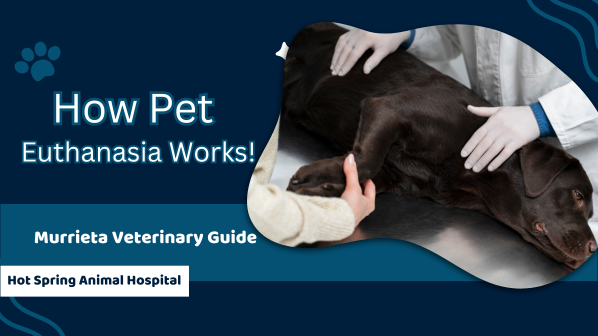
Pet euthanasia works by allowing your pet to pass away peacefully without pain or fear. Veterinarians often administer a sedative before giving the final euthanasia injection. Your pet gently falls asleep before their heart and breathing naturally stop within only a few minutes.
- Key Takeaways
- Pet Euthanasia Process in Murrieta: When Euthanasia Is Considered
- Before the Procedure: Pet Euthanasia Preparation
- The Sedation Phase: What Sedation Is Used in Euthanasia, and Is Euthanasia Painful for Pets?
- The Euthanasia Injection: How Pet Euthanasia Works, and What Happens During Pet Euthanasia
- After the Passing: What Happens After Euthanasia
Key Takeaways
- Pet euthanasia is a humane option when pain or suffering can no longer be controlled.
- Quality of life matters most, including comfort, appetite, mobility, and happiness.
- Sedation is given first so pets feel calm and relaxed before the final injection.
- The brain loses awareness first, meaning pets do not feel pain during the process.
- Small reflexes after passing are normal, even though the pet is already unconscious.
- Families can prepare ahead of time, including deciding whether to stay and planning aftercare
- Grief after euthanasia is natural, and support from loved ones can help during healing.
Saying goodbye to a pet is heartbreaking. When you are facing that moment, it can help to understand what will happen. Understanding Pet euthanasia does not make it easy, but it can make it less scary.
Euthanasia is considered a humane, compassionate choice when a pet is suffering and cannot get comfortable again. The goal is to prevent pain, distress, and anxiety before your pet loses consciousness, so the passing is calm and gentle.
If your pet is older or living with a long term illness, regular senior pet wellness exams can also help you plan ahead and talk through options before things feel urgent.
Pet Euthanasia Process in Murrieta: When Euthanasia Is Considered
Most families consider euthanasia when quality of life is clearly declining.
Some common signs it is time for euthanasia include ongoing pain that cannot be controlled, severe trouble breathing, repeated sickness, or a pet who no longer wants to eat, move, or enjoy favorite things.
A veterinarian can help you decide with kindness and honesty.
Many people also use a pet quality of life scale, such as the HHHHHMM style checklist. It looks at comfort, hunger, hydration, hygiene, happiness, mobility, and whether there are more good days than bad days.
These tools do not decide for you, but they can help you see patterns and talk through them.
Before the Procedure: Pet Euthanasia Preparation
Knowing what to expect at a pet euthanasia appointment can help you feel more steady on a hard day. Most visits include time to talk, time for a calming medicine, and then the final injection.
A few simple ways to prepare:
- Write down questions you want answered, like how the room will be set up and how your pet will be kept comfortable.
- Decide whether you want to stay with your pet during the final step. There is no right or wrong choice.
- Bring a favorite blanket or toy if it helps your pet feel safe.
- Think about aftercare ahead of time, like cremation or burial, so you are not forced to decide while you are overwhelmed.
The Sedation Phase: What Sedation Is Used in Euthanasia, and Is Euthanasia Painful for Pets?
In most cases, how vets perform euthanasia starts with sedation.
This is a calming medicine given before the final injection, especially when family members are present.
End of life care guidelines recommend pre euthanasia sedation or anesthesia because it can reduce anxiety and make the process smoother.
What does euthanasia feel like for a pet during sedation? For most pets, it feels like getting sleepy. Your pet may relax, rest their head down, and drift into a deeper sleep.
The calming step often takes a few minutes.
Read more: How Often Should You Visit a Veterinarian?
The Euthanasia Injection: How Pet Euthanasia Works, and What Happens During Pet Euthanasia
Once your pet is calm or asleep, the veterinarian gives the euthanasia medication. Barbiturates such as pentobarbital are the most common euthanasia agents. They work by making the brain lose awareness first, then breathing stops, and the heart stops after that.
Many euthanasia solutions for dogs include pentobarbital and phenytoin. When given into a vein, unconsciousness happens quickly, within seconds. Breathing stops shortly after, followed by the heart. Because the brain shuts down first, pets do not feel pain during the final moments.
Peaceful euthanasia explained simply: your pet falls asleep first, and they are not aware of what happens next.
Some natural reflexes can happen even though your pet is already unconscious:
- A few deeper breaths or a brief gasp
- Small muscle twitches or a gentle stretch
- Eyes staying open
- A release of urine as muscles relax
These can be upsetting to see, but they are normal body reflexes. Drug information and Veterinary research note that movement can occur even when the brain is no longer aware.
Your veterinarian will monitor and confirm your pet has passed before telling you the procedure is complete.
After the Passing: What Happens After Euthanasia
Many people want a quiet moment to say final goodbyes.
We can also offer keepsakes like a paw print or a small clipping of fur if you want one. Aftercare options usually include cremation or burial.
If you are not sure what you want, it is okay to ask for a clear explanation and take a breath before deciding.
Read more: What to Do If Your Pet Eats Something Toxic: Signs & Immediate Steps
What Owners Should Expect Emotionally (Pet Grief Support)
Even when you know it was the kindest choice, grief can hit hard. You might feel relief, sadness, guilt, or all of it at once. That is normal.
A few gentle ways on how to cope after pet euthanasia:
- Keep the next day simple. Eat, sleep, drink water, and lean on your people.
- Write down one favorite memory so it does not get lost in the pain.
- If you have kids, use simple, honest words and let them ask questions.
Conclusion
Our Animal Hospital’s pet euthanasia step by step process is designed to be calm and painless. Preparation and questions, a relaxing sedation, a medicine that lets the brain fall asleep first, and gentle aftercare afterward.
If you are facing this decision in Murrieta, you deserve clear answers and a caring space to say goodbye, and we’re here to help you. Having a veterinarian who knows your pet and your family can make this moment feel a little less overwhelming.
Frequently Asked Questions
Share This Article

Written by : Hot Springs Animal Hospital
Hot Springs Animal Hospital is dedicated to providing exceptional veterinary care in Murrieta, CA. Our experienced team is passionate about keeping pets healthy through preventive care, advanced treatments, and compassionate service. We proudly serve pet parents with a full range of veterinary services to ensure every pet lives a long, happy life.