Share This Article
Most cats recover well after spaying with 10–14 days of careful home care. Give your cat a quiet place to rest, prevent jumping or licking, and follow every medication instruction. Check the incision daily, and contact your veterinarian if you notice swelling, discharge, or unusual behavior.
- Key Takeaways
- What to Expect Right After You Bring Your Cat Home
- Aftercare for Spayed Cats: Setting Up the Ideal Recovery Space
- Feeding and Hydration Tips After Spaying
- Activity and Movement: What’s Safe and What’s Not
- Cat Spay Pain Management and Medications
Key Takeaways
- Sleepiness and wobbliness are normal during the first 24 hours after spay surgery.
- Create a quiet recovery space with soft bedding, low noise, and no jumping areas.
- Offer small amounts of water and food first, then slowly return to normal feeding.
- Limit activity for 10–14 days to protect healing and prevent complications.
- Use pain medication exactly as prescribed, and never give human medicines.
- Check the incision daily for redness, swelling, discharge, or opening.
- Call your vet immediately if you notice bleeding, repeated vomiting, or extreme weakness.
If you are a cat owner in Murrieta, California, the trip home after a spay can feel scary. Your cat may look sleepy, act quiet, or turn away from food. That can make you worry fast.
Here is the good news. Most cats do well with simple, calm care. This is normal spaying and neutering recovery, and you do not need to do anything fancy.
This guide walks you through cat spay recovery at home, starting the moment you bring your cat home after Pet Spaying and Neutering Services. You will learn what to expect, how to set up a safe space, and what signs mean you should contact the vet team.
What to Expect Right After You Bring Your Cat Home
Immediate Recovery Period (First Few Hours)
For the first few hours, your cat is waking up from the anesthesia. Many cats seem:
- Very sleepy and slow
- Wobbly when they walk
- Quiet and not social
- Not interested in toys
Here are simple spay surgery aftercare tips for the first few hours:
- Keep your cat inside and in one quiet room.
- Keep the room calm. Low noise, low lights.
- Let your cat come out of the carrier when she wants to.
- Do not let her jump up on furniture.
If your cat wants to hide, that is okay. Just make sure you can still check on her and that she cannot squeeze into a spot you cannot reach.
Typical Behavior to Expect: Cat Behavior After Spay Surgery
On day one, normal cat behavior after spay surgery can include:
- Not eating immediately
- Being sleepy or withdrawn
- Mild soreness (moving slowly, less jumping)
What matters most is the direction. Your cat should look a little better tomorrow than today. If she looks worse, that is a sign to pay attention.
Read more: The Importance of Spaying and Neutering Your Pet
Aftercare for Spayed Cats: Setting Up the Ideal Recovery Space
A calm setup is one of the biggest parts of aftercare for spayed cats. Think of it as a small “rest room” where your cat can heal without being bothered.
Spay Home Care Setup Checklist
Use this spay home care setup checklist before you open the carrier:
- A small room with a door you can close
- Soft bedding on the floor
- Food and water nearby
- Litter box nearby
- Block stairs if possible
- Block jump spots like chairs, beds, and window ledges
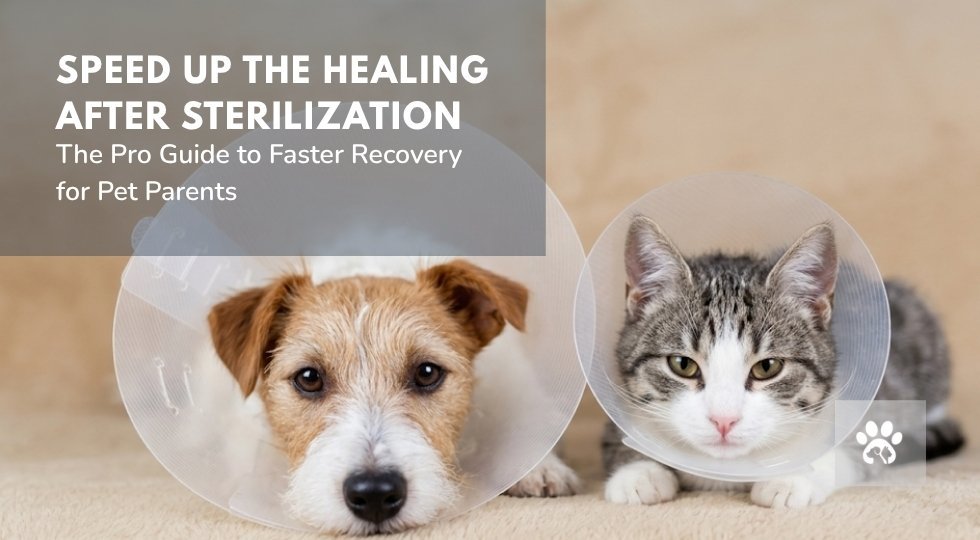
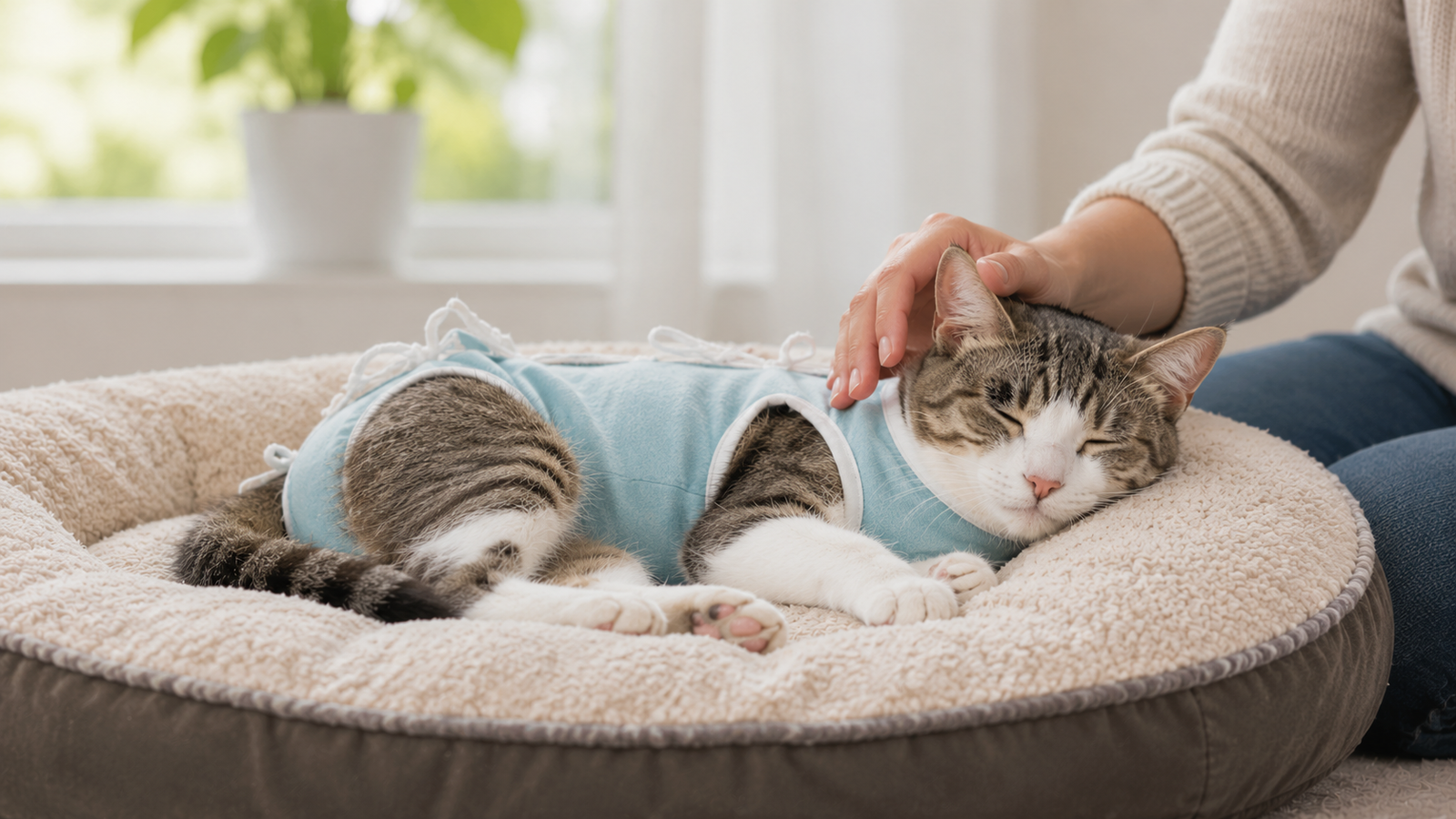
Your cat may want to lick the surgery spot. Licking can slow healing and can cause problems. If your vet gave you a cone or a recovery outfit, use it as directed. Keep the surgery spot clean and dry. Do not put creams, sprays, or home remedies on it unless your vet tells you to.
Read more: The Right Time to Spay Your Cat
Feeding and Hydration Tips After Spaying
For post-spay cat feeding, the best plan is “small and slow.” Anesthesia can upset the stomach, so a big meal right away is not a great idea.
Here is a simple feeding plan:
- Offer water once your cat is awake and sitting up.
- A little later, offer a small meal, about half the usual amount.
- If your cat keeps it down, offer a little more later.
Watch for nausea
One vomit can happen after surgery. What matters is if it keeps happening.
Call your vet if:
- Your cat vomits more than once
- Your cat cannot keep water down
- Your cat will not eat anything by the next day
Foods that help healing
For spay recovery nutrition, keep it familiar:
- Stick with your cat’s normal food.
- Avoid new treats or people food for now.
- Keep fresh water available.
If your cat already eats wet food, that can help with hydration. Do not change foods just because it is surgery week.
Read more: Top Benefits of Choosing a Professional Spaying and Neutering Clinic
Activity and Movement: What’s Safe and What’s Not
Cats can feel “normal” fast, but healing still takes time. That is why activity restriction after spaying is so important.
Controlled movement
Safe movement is calm movement. Your cat can:
- Walk around the room
- Use the litter box
- Eat and drink
- Stretch and change sleeping spots
Try to prevent:
- Running
- Jumping on furniture
- Climbing cat trees
- Rough play
- Chasing toys at full speed
Short supervised walks, if needed, should be simple and slow. Most cats do not need walks outside during recovery.
Why activity restriction matters
These spay care tips are not just rules. They protect healing.
Too much movement can pull on the healing area. That can lead to swelling, bleeding, or the cut opening. Quiet rest helps your cat heal faster.
Here is a simple spayed cat recovery timeline:
- Days 0 to 2: very calm, mostly rest
- Days 3 to 7: more energy, still no jumping
- Days 10 to 14: many cats can go back to normal activity if healing looks good
Read more: How Much Does It Cost to Spay a Pet in Murrieta?
Cat Spay Pain Management and Medications
Good cat spay pain management helps your cat relax. Rest is one of the best tools for healing.
Most cats go home with vet-prescribed pain medicine, plus clear directions. Follow them exactly. Do not give human meds since some of them can seriously harm your fur baby.
When pain meds should be given
Keep it simple:
- Give medicine only as directed.
- Give it on time.
- Do not give extra doses.
- If you miss a dose, call and ask what to do.
Signs pain is not controlled
Call your vet if you notice:
- Crying that will not calm down
- Hiding and refusing to move at all
- Fast breathing while resting
- Growling or snapping when you get near the belly area
Conclusion
At our Hot Spring Animal Hospital, Most Murrieta cats recover well with quiet time, small meals, and careful watching. You do not need to overthink it. You just need to keep things calm and safe.
Quick recovery checklist
- Quiet room, warm bedding, low noise
- Water first, then small meals for post-spay cat feeding
- Follow activity restriction after spaying for about 10 to 14 days
- Follow your vet’s plan for cat spay pain management
Signs of spay complications and when to call the vet after cat spay
Call your vet right away if you see signs of spay complications, such as:
- Bleeding that does not stop
- The cut opens
- Bad smell or fluid coming from the cut
- Swelling that keeps getting worse
- Vomiting that will not stop
- Your cat is very weak, or hard to wake up
If you are unsure, it is always better to call and ask. That is part of being a good pet owner.
Frequently Asked Questions
Share This Article

Written by : Hot Springs Animal Hospital
Hot Springs Animal Hospital is dedicated to providing exceptional veterinary care in Murrieta, CA. Our experienced team is passionate about keeping pets healthy through preventive care, advanced treatments, and compassionate service. We proudly serve pet parents with a full range of veterinary services to ensure every pet lives a long, happy life.
All Categories
Related Articles

October 5, 2026