Share This Article
Most dog microchips last 25 years or longer, making replacement rarely necessary during your dog's lifetime. The chip itself requires no maintenance because it contains no battery or moving parts. Annual scans and updated registration details help ensure the microchip remains effective if your dog becomes lost.
Key Takeaways:
- Most dog microchips last 25 years or longer, usually for a dog’s entire life.
- Microchips have no battery and activate only when scanned.
- The chip itself rarely fails; outdated registration details are the most common issue.
- Annual vet visits in Murrieta are a good time to confirm the chip still scans properly.
- Microchips are not GPS trackers and should be used with collars and ID tags.
If you’ve ever pictured your dog slipping a collar on a hike or bolting through an open gate, you already know why microchips matter. If you’re looking into a pet microchipping Service in Murrieta and wondering how long it actually lasts, you’re asking exactly the right question.
What is a pet microchip and how does it work?
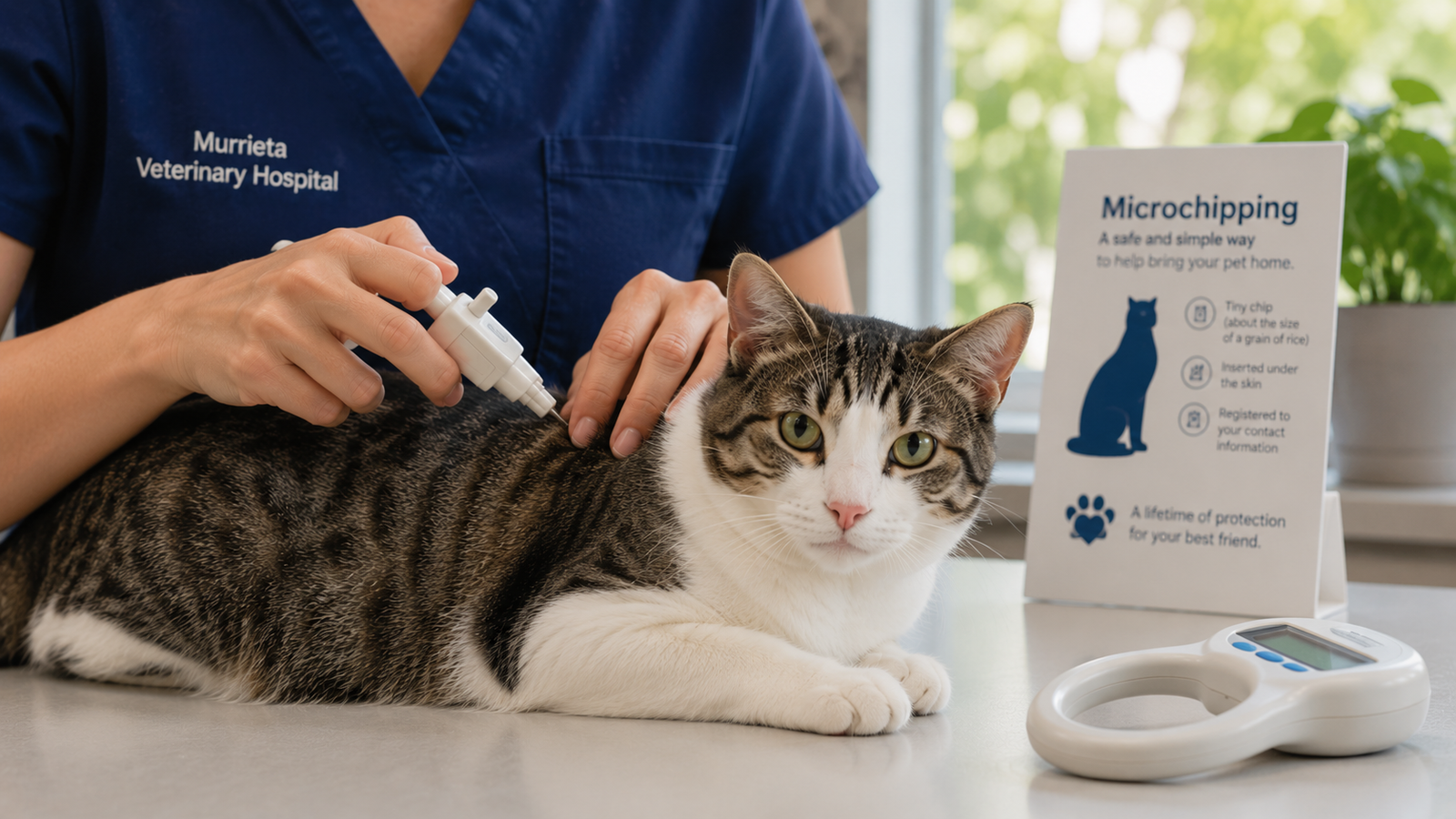
A pet microchip is a tiny radio-frequency identification (RFID) device, about the size of a grain of rice, that sits just under your dog’s skin between the shoulder blades.
It isn’t a GPS tracker and it doesn’t replace a collar and tag. Instead, it stores a unique ID number that links to your contact information in a registry.
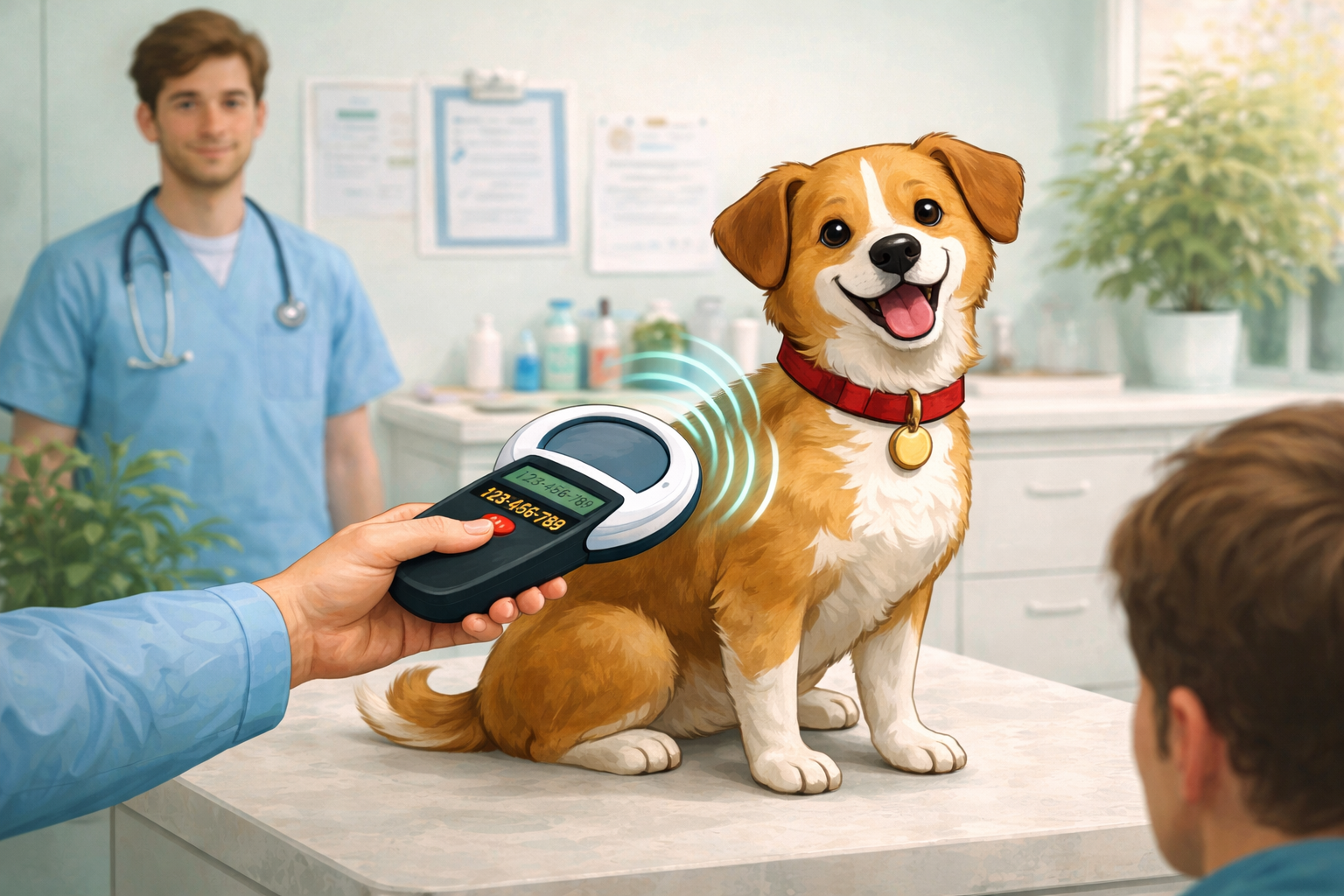
When a shelter or clinic scans a microchip at vet visits or after a dog is found, a handheld scanner passes over that area.
The scanner sends out a brief radio signal, which “wakes up” the chip just long enough for it to send back the ID number. The chip has no battery and is powered for a split second by the scanner’s radio waves, which is one reason its lifespan is so long.
How Long Do Microchips Last in Dogs?
Most modern chips are built to function for about 25 years or more. Large animal welfare organizations note that microchips are designed to last the lifetime of a dog or cat, and true failures are very rare.
For most families, that means a single implant will cover the entire microchip lifespan in dogs and you’ll never need to think about replacing it.
There are a few caveats that can affect the practical microchip lifetime dogs experience:
- Very rare chip failure or unreadable chips
- Scanner issues (older scanners that don’t read every frequency)
- Company or database closures that break the link between the chip number and your contact details
In other words, the physical chip usually lasts. The weak points are the scanner and the registration behind it, which is where smart maintenance comes in.
Read more: How Much Does It Cost to Microchip a Dog?
Real-world problems & what owners should watch for
Most Murrieta dogs carry a microchip that works quietly in the background, but a few issues are worth staying ahead of:
- Chip migration
A small percentage move slightly from the original site. Have your vet scan between the shoulder blades and around the neck and upper chest. - Microchip failure / read-scanner problems
Often the chip is fine and the scanner isn’t. Older scanners miss certain frequencies. Ask for a universal, slow, thorough scan. - Company or database shutdowns
Some microchip companies have closed, forcing records to shift. Check which registry holds your dog’s info and complete any needed transfer. - Out-of-date contact info
Most problems come from old phone numbers or emails.
Staying on top of these keeps your dog’s ID reliable, especially for families who hike, travel, or board their pets.
Read more: How Much Does It Cost to Microchip a Cat?
How to check your dog’s microchip?
Good times to have the chip checked:
- Yearly wellness visits
- Before boarding, daycare, or grooming
- Right after adoption or ownership change
Here’s a simple routine you can follow.
- Ask your vet to scan the chip: Confirm the chip is present and readable. If it doesn’t read at first, ask them to scan more than once and over a wider area.
- Write down the number or snap a photo: Keep it in your phone and with your vaccine records.
- Use a registry lookup tool: Free tools endorsed by veterinary organizations let you enter the number and see which registries might hold your pet’s information.
- Log in and check your details: This is where you register a microchip online or confirm that your address, cell number, and email are correct.
- If the chip isn’t found in any registry:
- Ask the clinic to double-check the number.
- Complete a microchip registration transfer if the dog changed homes.
- If the chip truly can’t be read even with multiple scanners, your vet may talk with you about microchip replacement so your dog always has a working ID.
When to microchip your dog?
There isn’t one magic date, but there are sensible windows for microchip implant age for puppy care.
Our vet team recommends:
- Microchipping around 8 weeks of age or at a first or second puppy vaccination visit
- Microchipping at the time of spay or neuter, while your dog is already under anesthesia
- Microchipping immediately at adoption, if a rescue dog does not already have a chip
In everyday terms, good times to schedule it include:
- First or second puppy vaccine appointment
- Pre-op visit before spay, neuter, or dental work
- Any wellness visit for an adult dog that isn’t chipped yet
If you’re browsing for a microchip clinic near me, look for licensed veterinary teams that use ISO-standard microchips and help you complete the registration, not just the injection.
Read more: How Pet Microchipping Works?
Microchip maintenance – Does anything need replacing?
Most families in Murrieta will never need to replace a chip if:
- The chip scans clearly at the clinic
- A lookup tool shows it attached to an active registry
- Your contact information stays current
Situations where microchip replacement or adding a second chip might be suggested:
- The chip cannot be detected even with a universal scanner
- The registry attached to the number has permanently closed and can’t be updated, leaving your dog effectively “unregistered”
As for microchip cost in Murrieta, local prices tend to follow national averages. Across the U.S., microchipping a dog usually costs somewhere between 25 and 60 dollars, sometimes a bit more in certain regions, with many clinics combining it with other services at a visit.
That one-time fee provides protection through the whole microchip lifetime dogs enjoy.
Conclusion
A well-placed microchip gives your dog a lifelong safety net, but it only works when the chip scans cleanly and your contact details stay current.
A quick yearly check keeps everything reliable, especially if your dog hikes or travels with you. If you want your dog protected with a dependable microchip and up-to-date vaccines, schedule a visit with the team at Hot Springs Animal Hospital.
Frequently Asked Question
Share This Article

Written by : Hot Springs Animal Hospital
Hot Springs Animal Hospital is dedicated to providing exceptional veterinary care in Murrieta, CA. Our experienced team is passionate about keeping pets healthy through preventive care, advanced treatments, and compassionate service. We proudly serve pet parents with a full range of veterinary services to ensure every pet lives a long, happy life.