Share This Article
Dog microchip cost in Murrieta usually range from $30 to $60, depending on your veterinarian and location. The procedure is quick, safe, and provides permanent identification throughout your dog's lifetime. Keeping your registration details updated ensures the microchip works whenever your dog is found.
When you bring a dog home, there are a few things you think about right away.
Food, toys, a collar, and a tag. Another thing that’s just as important is a microchip.
A lot of pet parents ask how much does it cost to microchip a dog and is dog microchip worth it. The truth is it’s not expensive, and it’s a one-time thing that gives peace of mind for years.
During a pet microchipping service, the chip gets placed during a regular visit, and the staff will guide you with registration so your details are always up to date.
In this guide, you’ll learn about dog microchip price, what the cost includes, where to find affordable options, how long microchips last, and why proper registration matters just as much as implantation.
Key Takeaways
➤ Dog microchipping is a one-time procedure that gives your pet permanent identification for life.
➤ Most veterinary clinics keep the dog microchip price between $50 and $70, while low-cost clinics often charge less.
➤ A microchip can’t track your dog’s location, but it helps shelters and vets identify your pet quickly.
➤ Registering the microchip and updating your contact details are just as important as implantation.
➤ A small investment today can greatly improve your chances of bringing a lost dog home.
What Is a Microchip for Dogs?
A microchip is a tiny radio ID, about the size of a grain of rice, that sits just under the skin. It stores a unique number that links to your contact details in a registry. It doesn’t track location, and it has no battery. The chip helps vets and shelters match a found dog to the right person once the number is looked up.
Quick facts
(i) Permanent ID that supports collars and tags
(ii) No GPS and no moving parts
(iii) Works for life, but only if your contact info is kept current in the registry
What does microchipping a dog do?
Microchipping gives your dog a reliable backup ID. When a clinic or shelter scans the chip, the number pulls up your details from the registry so you can be reached fast. It’s a simple way to prove ownership and speed up reunions.
Applications and uses
(i) Reunites lost pets with families
(ii) Helps animal services identify owners during emergencies
(iii) Required for all dogs entering the United States as of August 1, 2024, along with other travel rules such as minimum age and paperwork
Average Dog Microchip Cost in the U.S.
Most pet parents pay about $50 to $70 for the implant at a full-service clinic. National roundups continue to cite around $50 as a common figure, while community events often price it closer to $20 to $25.
Typical range
▸ Vet clinics: usually $50 to $70
▸ Low-cost clinics or shelter days: often $20 to $25
▸ Mobile or in-home service: chip price is similar, total is higher once a house call fee is added
Dog microchip registration cost
▸ Many providers include basic registration
▸ Free registration is available for any brand of chip through 24Petwatch’s registry
▸ If you switch registries or add extra services, small one-time fees may apply depending on the provider
Puppy microchip cost: Puppies cost the same as adult dogs. Many pet parents bundle the chip with pet vaccination or spay and neuter services to save an extra office fee.
Is microchipping covered by pet insurance?
Coverage varies. Standard accident and illness plans often do not reimburse for microchips. Some wellness or preventive add-ons do cover it, so it pays to check your plan or request a wellness rider before your appointment.
What’s Included in the Dog Microchip Cost in Murrieta?
When you compare pet microchipping cost, the number alone doesn’t tell the full story. One clinic may charge less than another, but the services included can be very different. Before scheduling an appointment, ask what your fee covers so you know exactly what to expect.
| Service | Why It Matters |
| Microchip | A tiny identification chip that stays with your dog for life. |
| Implantation | A veterinarian or trained veterinary professional inserts the chip beneath your dog’s skin. |
| Microchip scan | Confirms the chip is working before you leave the clinic. |
| Initial registration* | Some clinics register your dog’s chip with a recovery database during your visit. |
*Registration isn’t included everywhere, so always ask before booking.
Some clinics may offer optional services
Depending on the provider, you may also be offered:
(i) Premium lost pet recovery plans
(ii) Travel assistance programs
(iii) Lost pet alerts
(iv) Registry transfer assistance
These services are optional and are separate from the microchip itself. Your dog can still be identified without them.
Questions worth asking
Before your appointment, ask these simple questions:
- Does the price include registration?
- Will your team help me complete the registration?
- Are there any additional fees after today’s visit?
Knowing the answers helps you compare clinics based on value, not just price.
Where Are Microchips Placed in Dogs?
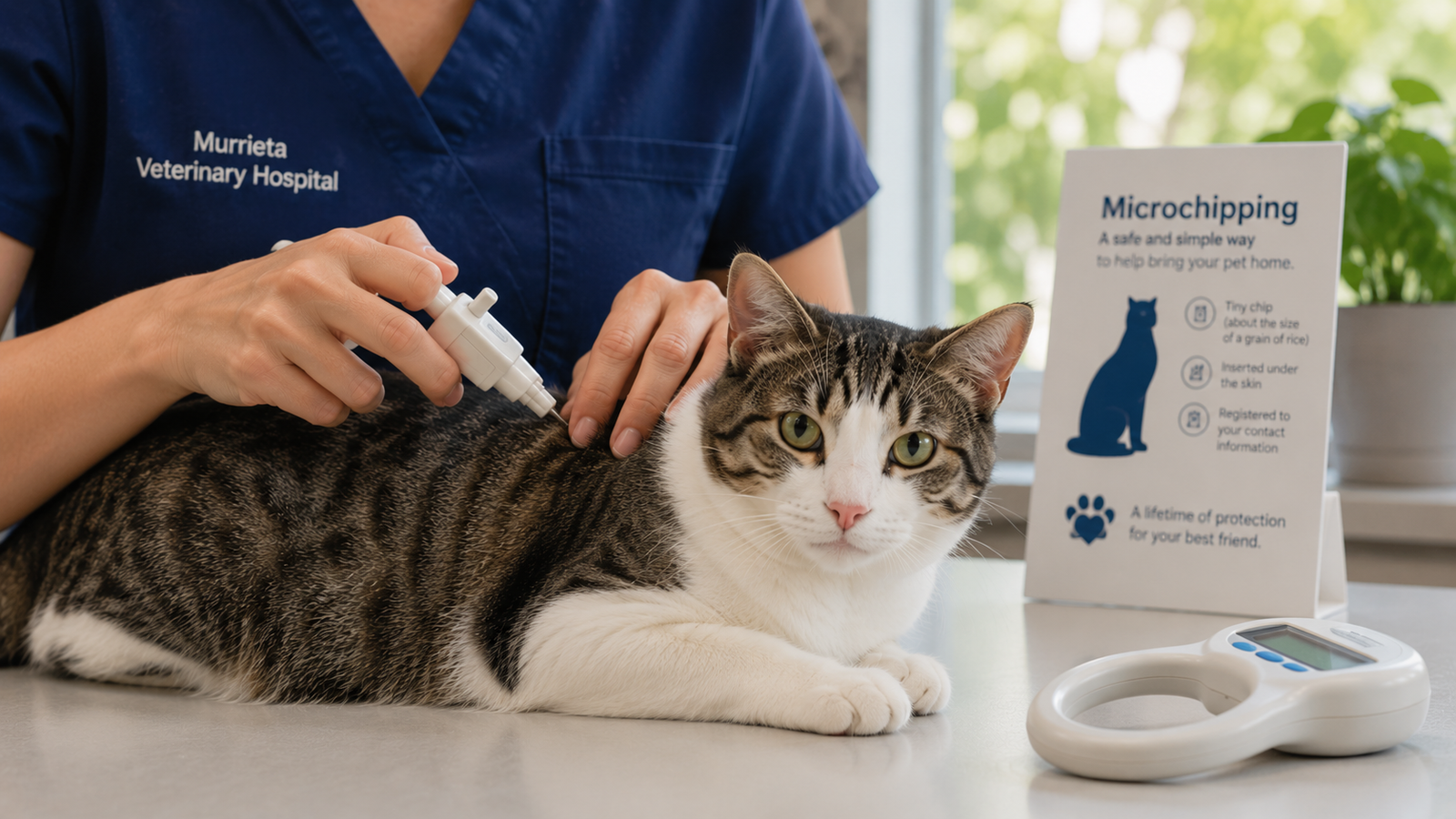
The standard dog microchip location is under the skin between the shoulder blades on the midline. The chip is injected with a single needle, then scanned to confirm it reads. Most dogs tolerate it like a vaccine. This is also how most clinics handle getting a dog chipped step by step.
Dog microchipping procedure at a glance:
(i) A sterile chip is scanned in the package to verify the number
(ii) Skin over the shoulders is gently lifted, the chip is injected, then scanned again
(iii) Staff complete or guide you through online registration the same day
How Long Does a Dog Microchip Murrieta Last?
One reason veterinarians recommend microchipping is its long-term reliability. A dog microchip is designed to last for your pet’s lifetime. It contains no battery, so it doesn’t need charging or scheduled replacement.
But even though the chip is permanent, your responsibilities continue. Keep these habits in mind:
- Update your contact information whenever it changes.
- Ask your veterinarian to scan the chip during annual wellness exams.
- Store your dog’s microchip number with its medical records.
These quick steps help confirm the chip can still be detected and that your information remains accurate.
※Remember: The microchip rarely needs attention, but your contact details do. Keeping your registration updated gives your dog the best chance of finding the way back home if they ever become lost.
What Happens If a Dog Microchip Isn’t Registered?
Getting your dog microchipped is only the first step. Registration is what connects that tiny chip to your contact information. Here’s what happens when your dog is found:
- A shelter or veterinary hospital scans the microchip.
- The scanner displays the unique identification number.
- Staff search the matching registration database.
- They use the contact details linked to that number to reach you.
If your microchip has never been registered, or your phone number has changed, staff may have no reliable way to contact you.
Why does registration matter?
You can think of a microchip as your dog’s permanent ID card. Without registration, the ID number exists, but it doesn’t point to you. AAHA also recommends updating your registration whenever you:
- Move to a new home
- Change your phone number
- Update your email address
- Adopt a pet that already has a microchip
If you’re unsure which registry stores your pet’s information, the AAHA Universal Pet Microchip Lookup Tool can identify the correct registry using your dog’s microchip number.
Where Can You Get a Low-Cost Dog Microchip?
Dog microchipping is available from several organizations, and affordable options are easier to find than many pet owners realize.
| Location | What You Can Expect |
| Veterinary hospitals | Professional implantation, health assessment, and registration guidance |
| Animal shelters | Reduced pet microchipping cost during adoptions or community programs |
| Humane societies | Seasonal low-cost microchip clinics |
| Vaccination events | Discounted microchipping during wellness events |
Many shelters and veterinary hospitals also offer reduced dog microchip costs during special events. But don’t choose based on price alone. A lower fee may sound appealing, but ask these questions before making your decision:
(i) Is registration included?
(ii) Will someone help me register the microchip?
(iii) Will the chip be scanned before I leave?
Reduced-cost clinics sometimes expect owners to complete registration later. Missing that step can make the microchip far less useful if your dog gets lost.
Ready to Microchip Your Dog? Hot Springs Animal Hospital Can Help!
Dog microchipping is one of the easiest ways to protect your pet for life. By understanding the adult dog and puppy microchip cost, choosing the right provider, and keeping your registration updated, you give your dog a stronger chance of finding the way home if they ever become lost.
At Hot Springs Animal Hospital, we provide safe, affordable pet microchipping with professional implantation, registration guidance, and universal microchips that can be read by veterinary clinics and shelters nationwide.
Write to us here, schedule an appointment, or call (951) 600-0830 to give your dog permanent identification and lasting peace of mind.
Frequently Asked Question
Share This Article

Written by : Hot Springs Animal Hospital
Hot Springs Animal Hospital is dedicated to providing exceptional veterinary care in Murrieta, CA. Our experienced team is passionate about keeping pets healthy through preventive care, advanced treatments, and compassionate service. We proudly serve pet parents with a full range of veterinary services to ensure every pet lives a long, happy life.