Share This Article
Preparing your home for a new puppy starts with creating a safe, comfortable environment before adoption day. Puppy-proof each room by removing hazards, gather essential supplies like food, a crate, bed, toys, and ID tag, establish a daily routine, and schedule your puppy's first veterinary visit. For families in Murrieta, it's also important to secure your backyard, provide shade and fresh water, and protect your puppy from hot outdoor surfaces during warm weather.
Bringing home a puppy is exciting, but your home needs to be ready before adoption day. A safe space, simple routine, puppy supplies, and a vet recommended first visit can help your puppy adjust faster. In Murrieta, families should also plan for warm weather, secure fencing, shade, and safe outdoor time.
A new puppy does not understand danger yet. Wires look like toys. Shoes feel fun to chew. Trash smells interesting. Stairs, hot patios, cleaning products, and small objects can all cause problems.
That is why this pre adoption checklist for puppy planning matters. It helps you protect your puppy, lower stress, and make the first few days at home easier for everyone.
This guide is best for puppies from 8 weeks to 12 months old.
Pre-Adoption Checklist: Are You Ready for a Puppy?
Before you adopt a puppy in Murrieta, make sure your home, schedule, and family are ready. A puppy needs more than love. They need time, patience, training, money, and a safe place to grow.
Use this quick puppy adoption checklist before bringing your puppy home:
- Choose where your puppy will sleep.
- Set up food and water bowls.
- Buy puppy food, a leash, collar, ID tag, crate, bed, toys, and cleaning supplies.
- Puppy proof your home.
- Plan potty breaks and feeding times.
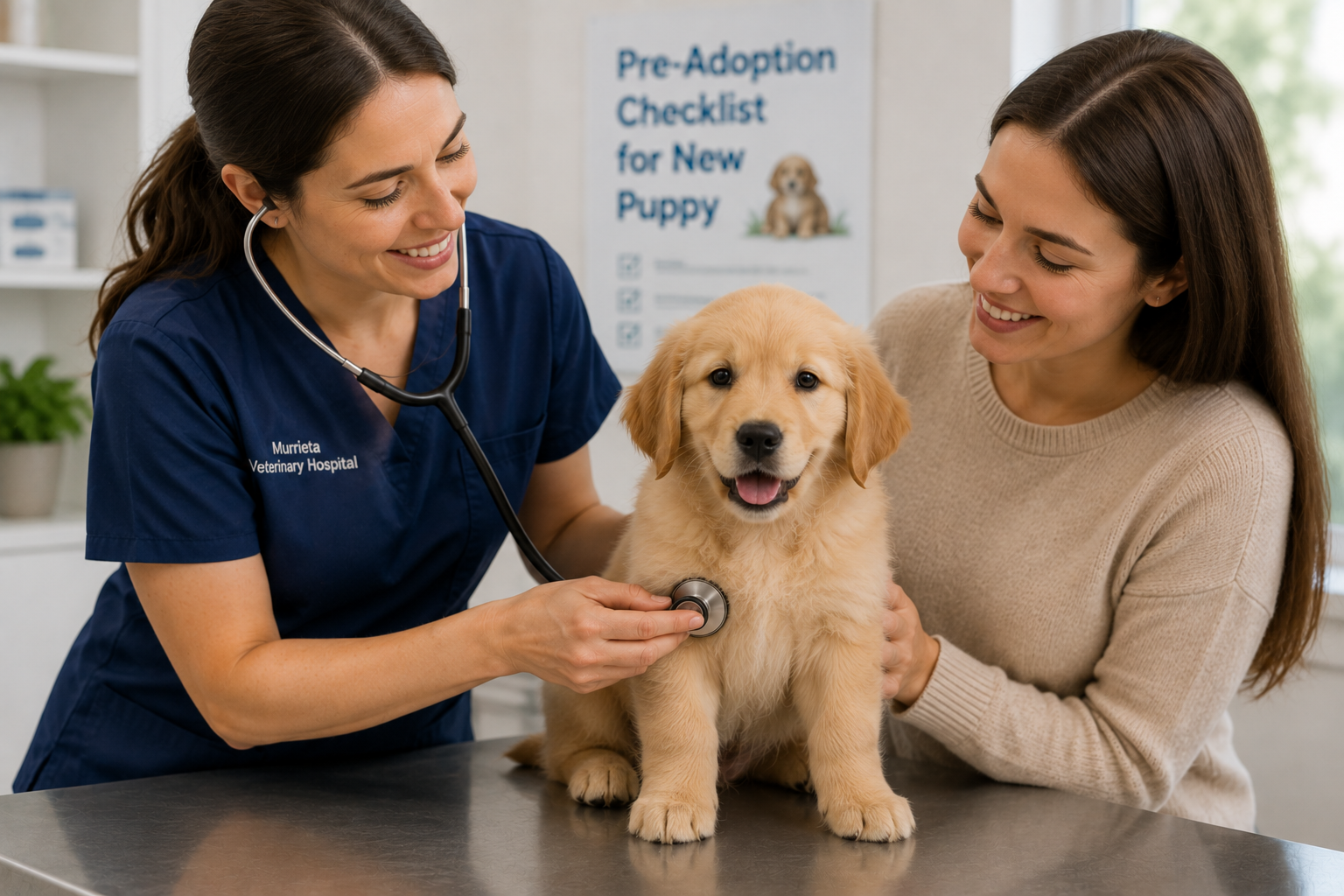
- Book a vet recommended first visit.
- Talk with your family about puppy rules.
- Check your backyard for gaps, heat, and hazards.
How to Plan Time Commitment and Daily Routine?
Puppies do best with a simple daily routine. They need food, potty breaks, training, play, naps, and calm time.
A young puppy may need to go potty after:
- Waking up
- Eating
- Drinking
- Playing
- Training
- Getting excited
- Before bedtime
If you work long hours, plan help before adoption day. A puppy should not be left alone for too long, especially in the first few weeks. Ask a family member, trusted neighbor, or pet sitter to help with potty breaks if needed.
A simple daily routine may look like this:
| Time of Day | What Your Puppy Needs |
| Morning | Potty break, breakfast, short walk, play |
| Midday | Potty break, lunch, nap, short training |
| Afternoon | Potty break, play, chew toy time |
| Evening | Dinner, family time, gentle training |
| Night | Final potty break, crate or sleep time |
This helps your puppy learn what to expect.
How to Budget for Ongoing Costs?
A puppy has one-time costs and ongoing costs. Before adoption day, plan for more than the adoption fee.
- Puppy food
- Treats
- Bowls
- Crate or playpen
- Bed and blankets
- Leash, collar, harness, and ID tag
- Toys and chew items
- Grooming supplies
- Training support
- Vet visits
- Pet Vaccination
- Parasite prevention
- Emergency Vet care
A smart new puppy checklist before bringing home should always include a budget for surprise vet care. Puppies chew, run, jump, and sometimes swallow things they should not.
Read more: Vaccination Schedule Murrieta: What Pet Parents Need to Know in 2026
How to Understand Long-Term Responsibility?
A puppy is not a short-term decision. Most dogs are a 10 to 15 year commitment.
That means your puppy will grow through many life changes with you. Work, travel, family changes, moving, and daily routines may all need to include your dog.
Before adopting, ask yourself:
- Can I care for this puppy as an adult dog too?
- Can I handle potty accidents and chewing?
- Can I train with patience?
- Can I afford food, grooming, and vet care?
- Can I give daily time and attention?
If the answer is yes, you are closer to being ready.
How to Check Family and Household Readiness?
Everyone in the home should understand how to treat the puppy.
For kids, teach simple rules:
- Use gentle hands.
- Do not pull ears or tails.
- Do not wake a sleeping puppy.
- Do not take food or toys away.
- Do not chase the puppy.
- Ask an adult for help if the puppy bites during play.
For elderly family members, watch for tripping risks. Puppies can run under feet, jump, or leave toys in walkways.
For other pets, go slowly. Keep first meetings calm and supervised. Give each pet their own food space, bed, and safe area.
How to Puppy-Proof Your Home in Murrieta?
To puppy proof your home, look at every room from your puppy’s level. Puppies explore with their mouths. If something is on the floor, they may chew it. If something smells interesting, they may lick it. If something moves, they may chase it.
This puppy safety checklist will help with making home safe for puppies before adoption day.
How to Use a Living Room Safety Checklist:
The living room often has many hidden puppy hazards.
Check for:
- Loose wires
- Phone chargers
- Remote controls
- Coins
- Small toys
- Shoes and socks
- Low plants
- Candles
- Small decorations
- Recliner chairs
- Open bags
- Food left on tables
Good dog proofing house tips include using cord covers, closing storage baskets, moving small items higher, and blocking rooms that are not ready.
Also check under the couch. Puppies love finding forgotten things.
How to Make the Kitchen and Food Areas Safe?
The kitchen can be risky because puppies love food smells.
Keep these away from your puppy:
- Chocolate
- Grapes and raisins
- Onions and garlic
- Coffee
- Alcohol
- Gum or candy with xylitol
- Cooked bones
- Trash
- Greasy leftovers
Use a trash can with a lid. Keep food off low counters. Do not leave grocery bags on the floor. A curious puppy can pull something out in seconds.
This is one of the most important parts of preparing your home for a new puppy.
How to Remove Bathroom and Laundry Hazards?
Bathrooms and laundry rooms may look boring, but they can be dangerous for puppies.
Move these items out of reach:
- Cleaning sprays
- Bleach
- Laundry pods
- Medicine
- Vitamins
- Razors
- Hair ties
- Makeup
- Soap
- Dryer sheets
- Small towels
- Socks
Keep toilet lids closed. Keep cabinets shut. If needed, use child locks.
Many puppy hazards in home areas are small things people forget about. A puppy only needs a few seconds to grab something unsafe.
How to Prepare Your Backyard in Murrieta?
Backyard safety is extra important for Murrieta families because warm weather can affect puppies quickly.
Before your puppy goes outside, check:
- Fence gaps
- Loose gate latches
- Holes under the fence
- Sharp tools
- Small rocks
- Broken plastic
- Exposed wires
- Unsafe plants
- Pool access
- Hot concrete or turf
For preparing home for puppies in Murrieta families, heat safety should be part of the plan.
Set up:
- Shade
- Fresh water
- A cool rest area
- Short outdoor breaks
- Morning or evening playtime
- Supervised yard time
Do not leave a young puppy alone outside. Puppies can overheat, dig, chew, or find a way out.
Essential Supplies You Need Before Bringing a Puppy Home
A good new puppy essentials checklist should cover food, sleep, training, safety, toys, and grooming. You do not need every cute product in the store. You need the right basics.
Here is a simple table of things to buy before getting a puppy:
| Category | Supplies to Buy | Why You Need It |
| Feeding | Puppy food, bowls, treats | Helps with meals and training |
| Sleeping | Crate, bed, blankets | Gives your puppy a safe rest spot |
| Safety | Collar, leash, harness, ID tag | Helps keep your puppy secure |
| Training | Treat pouch, gates, cleaner | Helps with habits and accidents |
| Toys | Chew toys, puzzle toys, soft toys | Helps with chewing and boredom |
| Grooming | Brush, shampoo, nail clippers | Helps keep your puppy clean |
How to Choose Feeding Essentials?
Your puppy shopping list should start with food and bowls.
Buy:
- Puppy food
- Food bowl
- Water bowl
- Measuring cup
- Training treats
- Food storage container
Ask what food your puppy has been eating before adoption. If you need to change food, do it slowly. A fast change can upset your puppy’s stomach.
How to Set Up Sleeping and Comfort Items?
Your puppy needs a quiet place to sleep.
Buy:
- Crate or playpen
- Washable puppy bed
- Soft blankets
- Baby gate
- A safe corner of the home
The crate should feel safe, not scary. Keep it calm and comfortable. Let your puppy rest there after playtime, meals, and potty breaks.
How to Pick Training and Safety Tools?
These are must have items for new puppy safety:
- Leash
- Collar
- Harness
- ID tag
- Poop bags
- Enzymatic cleaner
- Baby gates
- Puppy pads, if needed
An ID tag should include your phone number. Even indoor puppies can slip out through a door or gate.
How to Choose Toys and Enrichment?
Puppies need safe things to chew. If you do not give them puppy-safe toys, they may chew shoes, furniture, or cords.
Good options include:
- Soft puppy chew toys
- Rubber chew toys
- Puzzle feeders
- Tug toys
- Treat toys
Avoid toys that are too hard, too small, or easy to break apart. Do not give toys with batteries, strings, bells, or tiny pieces.
Mental play matters too. Short games, food puzzles, and simple training can help your puppy feel busy and happy.
How to Buy Grooming and Hygiene Supplies?
Start grooming early so your puppy gets used to being touched.
Buy:
- Puppy-safe shampoo
- Brush or comb
- Nail clippers or grinder
- Dog toothbrush
- Dog toothpaste
- Towels
- Ear wipes, if recommended by your veterinary team
Keep grooming short. A calm one-minute brush is better than a long stressful session.
Local Resources for Puppy Owners in Murrieta
Murrieta puppy owners have local options for adoption help, pet care, outdoor spaces, and community support. Before adoption day, save important contact details and know where to go for help.
How to Find Animal Shelters and Adoption Centers
If you are looking for puppy adoption Murrieta options, start with local shelters and nearby rescue groups.
Search for:
- adopt a puppy in Murrieta
- Murrieta dog shelters
- puppy adoption near Murrieta
- dog adoption near Temecula
- puppy rescue near Menifee
- animal shelters near Wildomar
Murrieta families often look in nearby areas too, including Temecula, Menifee, Wildomar, Lake Elsinore, and Canyon Lake.
Before adopting, ask the shelter or rescue:
- How old is the puppy?
- Has the puppy seen a vet?
- What vaccines has the puppy had?
- Has the puppy been dewormed?
- What food is the puppy eating?
- Is the puppy used to kids, dogs, or cats?
- Are there any known health concerns?
Bring all records to your puppy’s first vet visit.
How to Choose Veterinary Clinics and Pet Care Services?
Many families searching for Murrieta veterinary clinics want to know what to do before the puppy comes home. The best step is to choose your veterinary team early and book your puppy’s first exam.
A vet recommended first visit should happen within the first week after adoption.
During this visit, your veterinary team can help with:
- Full puppy exam
- Weight check
- Vaccine record review
- Puppy vaccination schedule
- Parasite prevention
- Deworming needs
- Food advice
- Potty training questions
- Socialization guidance
- Spay or neuter timing
This is one of the most important puppy care tips for beginners. Do not wait until your puppy seems sick. Early care helps your puppy start strong.
Read more: Complete Pet Vaccination Guide for Murrieta, CA: Keep Your Dog & Cat Protected
How to Use Dog Parks and Outdoor Spaces Safely?
Murrieta has outdoor spaces where dogs can walk, play, and explore. But young puppies need to be careful around unknown dogs and public spaces until your veterinary team says it is safe.
If you search for dog parks in Murrieta, remember this rule: dog parks are not the first stop for a new puppy.
Start with safer socialization:
- Calm visitors at home
- Gentle handling
- Car rides
- Safe neighborhood walks, if approved
- Puppy training classes, if approved
- Meeting healthy, vaccinated dogs you know
Public parks and dog parks can come later. Your puppy needs socialization, but it should be safe and age-right.
Common Mistakes to Avoid Before Adopting a Puppy
Many puppy problems happen because people rush. A little planning can prevent stress, chewing, accidents, and safety issues.
How to Avoid Skipping Home Preparation?
Do not wait until your puppy arrives to start cleaning and moving things.
Before adoption day:
- Pick up small objects.
- Hide wires.
- Move shoes.
- Lock cleaning supplies away.
- Close bathroom doors.
- Set up the crate.
- Place food and water bowls.
- Check the yard.
- Block unsafe rooms.
A puppy can find trouble faster than you think.
How to Avoid Underestimating Time Commitment?
Puppies need a lot of help in the beginning.
They need time for:
- Potty training
- Feeding
- Cleaning accidents
- Chewing management
- Crate training
- Basic commands
- Vet visits
- Safe play
- Naps
If your schedule is busy, make a plan before adoption day. Do not guess later.
How to Avoid Buying the Wrong Supplies?
Some puppy products look useful but are not right for every puppy.
Avoid:
- Adult dog food
- Collars that are too big
- Toys with small parts
- Bones that are too hard
- Strong shampoos
- Cheap toys that break apart
- Long leashes for early training
- Heavy bowls that slide or tip
Start simple. Choose safe, puppy-sized items.
How to Avoid Ignoring Training Needs?
Training starts the first day your puppy comes home. Keep it kind and simple.
Start with:
- Name
- Come
- Sit
- Potty spot
- Crate calm
- Gentle mouth
- Leash walking
- Waiting at doors
Use treats, praise, and short lessons. Puppies learn best with calm practice. Yelling only scares them and makes learning harder.
Final Thoughts: Setting Your Puppy Up for a Happy Start
A puppy does not need a perfect home. A puppy needs a safe home, a kind family, a steady routine, and early vet recommended care.
If you are learning how to prepare for a puppy at home, start with safety first. Then buy the right supplies. Then plan the first week. Then book your puppy’s first vet visit.
For Murrieta families, remember to check heat, shade, water, fencing, and safe outdoor time. These local steps can make a big difference for your puppy’s comfort and safety. Follow Hot spring animal Hospital to know More.
Final puppy adoption checklist summary:
- Choose a safe room before your puppy comes home.
- Puppy proof your home room by room.
- Remove wires, toxic foods, cleaners, medicines, and small objects.
- Buy basic supplies before adoption day.
- Set a feeding, potty, play, and sleep routine.
- Plan for a 10 to 15 year commitment.
- Book a vet recommended first visit within the first week.
- Ask about the puppy vaccination schedule.
- Use Murrieta heat safety habits outside.
- Wait for veterinary guidance before dog parks.
- Keep training short, simple, and kind.
Frequently Asked Questions
Share This Article

Written by : Hot Springs Animal Hospital
Hot Springs Animal Hospital is dedicated to providing exceptional veterinary care in Murrieta, CA. Our experienced team is passionate about keeping pets healthy through preventive care, advanced treatments, and compassionate service. We proudly serve pet parents with a full range of veterinary services to ensure every pet lives a long, happy life.
All Categories
Related Articles

September 20, 2026
September 12, 2026