Share This Article
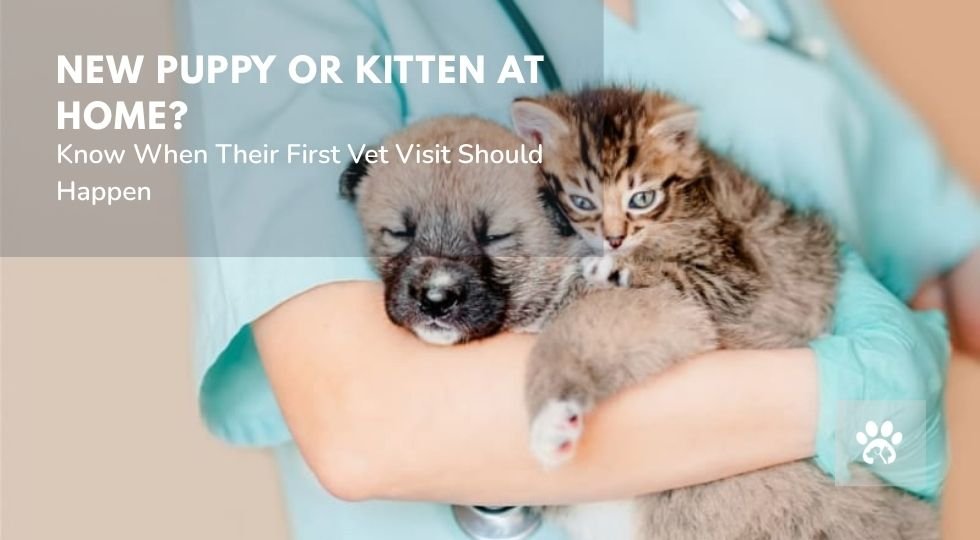
Plan your puppy or kitten's first vet visit around 6–8 weeks of age, or sooner if your new pet has health concerns. The appointment helps your veterinarian establish a health baseline, review previous care, plan vaccinations, discuss parasite prevention, and answer questions about nutrition, behavior, identification, and other early needs.
If you’ve just brought home a pet, you probably already have questions about feeding, vaccines, parasites, behavior, and growth. Your kitten and puppy’s first vet visit gives you a chance to get clear answers while your pet’s early care is being established. For many young pets, that first appointment commonly begins around 6–8 weeks of age.
Your veterinarian can also review previous records, check your pet’s overall health, and explain which preventive steps come next. Going into the appointment with your questions and any available records can make the visit much more useful.
Key Takeaways
➤ Plan your kitten or puppy’s first vet visit around 6–8 weeks, or soon after bringing them home.
➤ Bring past health records so your vet can build the right care plan.
➤ Early visits cover more than vaccines, including growth, parasites, nutrition, behavior, and identification.
➤ Young pets need regular follow-ups while their vaccine series is underway.
➤ Keeping up with early wellness visits helps give your new companion a healthy start.
When Should Your Puppy or Kitten Have Their First Vet Visit?
There’s no single appointment date that fits every new puppy or kitten. If you’re wondering, “When should I take my puppy to the vet?”, or “When should kittens see a vet?”, the right timing depends on four main factors: your pet’s age, health, previous care, and vaccination history.
- If your pet is 6–8 weeks old: This is a common starting point for puppy and kitten care services. Puppies may begin their initial pet vaccination services during this period, while kittens can begin their core vaccination series according to veterinary guidance and the specific vaccine being used.
- If your pet is older when you bring them home: Schedule the first examination soon after adoption rather than waiting for another age milestone. Your veterinarian can review the care they have already received and determine what needs to happen next.
- If vaccination records are incomplete: Don’t assume your pet has received every vaccine they need. Bring any records you received from the breeder, shelter, rescue, or previous owner so they can be reviewed during the appointment.
- If your new pet has health concerns: Age shouldn’t determine when you seek care. A puppy or kitten that appears unwell may need veterinary attention sooner, regardless of whether they’ve reached the usual age for their first routine visit.
Why Is Your Puppy or Kitten’s First Vet Visit Important?
Your first veterinary appointment is the starting point for your pet’s health plan. Several important things come together during this visit.
- Establish a health baseline: Your veterinarian assesses your pet’s current condition so future changes can be easier to recognize.
- Review previous care: Records from a breeder, shelter, rescue, or previous veterinarian can show which vaccines, treatments, or other care your pet has already received.
- Discuss preventive care: The appointment provides an opportunity to talk about the importance of pet vaccinations, parasite control, nutrition, identification, and pet microchipping services.
- Address behavior and development: Early questions about socialization and behavior can help you understand what your young pet needs at home.
- Look for less obvious concerns: A veterinary examination may uncover problems involving growth, pet dental health, or other early signs of illness that may not be apparent at home.
What Happens During a Kitten or Puppy’s First Vet Visit?
A first appointment should leave you with a clearer picture of your pet’s current health and the decisions coming next. Your pet’s history, examination findings, age, and lifestyle help determine which evaluations and preventive measures are appropriate.
Your veterinarian may:
- Review vaccination, deworming, adoption, breeder, shelter, or medical records.
- Perform a physical examination and assess the eyes, ears, mouth, skin, heart, lungs, abdomen, and other systems.
- Measure weight and assess body condition and growth.
- Review vaccines that are due and explain their purpose.
- Discuss fecal testing, intestinal parasites, deworming, and parasite prevention services.
- Discuss nutrition, feeding, behavior, socialization, identification, and spay or neuter timing.
- Recommend additional tests or follow-up when the history or examination supports them.
This visit isn’t simply about giving a vaccine. It establishes useful information for decisions made throughout the first year.
What Vaccines Will Your Puppy or Kitten Need?
Pet vaccinations aren’t chosen by age alone. Your pet’s previous vaccination history, health, lifestyle, travel, boarding plans, and potential exposure to infectious diseases can all affect the recommended plan. Understanding the difference between core and risk-based vaccines can also help you see why your puppy’s and kitten’s schedules may differ.
| Puppy | Kitten |
| Distemper – Helps protect against a serious viral disease that can affect several body systems. | Feline herpesvirus-1 (FHV-1) – Protects against an important cause of feline respiratory disease. |
| Adenovirus – Included in combination vaccines to help protect against canine infectious diseases. | Feline calicivirus (FCV) – Protects against a common feline viral infection that can cause respiratory and oral disease. |
| Parvovirus – Helps protect against a highly contagious virus that can cause severe gastrointestinal illness. | Feline panleukopenia (FPV) – Protects against a serious and highly contagious viral disease. |
| Leptospirosis – AAHA now considers this a core vaccine for dogs because all dogs in North America should be considered at risk. | Rabies – Given according to vaccine labeling and applicable laws. |
| Rabies – Required according to applicable laws and local requirements. | FeLV – Feline leukemia virus vaccination is considered core for kittens and cats younger than 1 year. |
| Lifestyle-based vaccines – Bordetella, canine influenza, Lyme disease, or other vaccines may be considered according to exposure risk. | Other risk-based vaccines – Additional vaccines may be considered according to lifestyle, location, and exposure. |
AAHA recommends at least three combination vaccine doses between 6 and 16 weeks for puppies. Kittens generally receive their core combination vaccine every 3–4 weeks until 16–20 weeks, depending on the vaccine and individual circumstances.
What Should You Bring to Your First Vet Visit for a Puppy or Kitten?
A little preparation can make the appointment more productive. Records matter because vaccination and deworming decisions partly depend on previous care. Observations from home can also reveal useful details that may not appear during an examination.
- Previous vaccination, deworming, adoption, breeder, shelter, or veterinary records.
- A fresh stool sample if requested or recommended.
- A leash and collar for a puppy.
- A secure carrier for a kitten.
- A list of medications, preventives, food, and supplements.
- Questions about feeding, house training, litter box use, chewing, sleep, behavior, or exercise.
- Notes about appetite, stool, energy, coughing, sneezing, vomiting, or other concerns.
What Should You Ask at the First Vet Visit for a Kitten or Puppy?
You don’t need to remember every question. Focus on decisions you’ll make over the next few weeks. Asking for specific next steps can help you understand what needs attention now and when your pet should return.
- Is my pet growing and gaining weight appropriately?
- Which vaccines are due now, and when are the next doses needed?
- Does my pet need a fecal test or parasite treatment?
- Which parasite preventives are appropriate?
- What should I feed, and how much?
- When should we discuss spaying or neutering services?
- When should my pet be microchipped?
- What changes should lead to an earlier examination?
How Often Will Your Puppy or Kitten Need Vet Visits After the First One?
Puppies and kittens both need closer veterinary follow-up during early life, but their vaccine schedules and preventive needs aren’t identical. Questions like “When should I take my kitten to the vet?” and “When should puppies see a vet?” after the first visit depend on species, age, previous care, health, lifestyle, and the vaccines being used.
| Stage | Puppy | Kitten |
| First visit | Commonly begins around 6–8 weeks | Commonly begins around 6–8 weeks |
| Early follow-ups | Often every 2–4 weeks while the initial vaccine series is underway | Often every 3–4 weeks while core kitten vaccines are being given |
| Vaccination series | Combination vaccines continue through at least 16 weeks | Core combination vaccination generally continues through 16–20 weeks |
| Parasite care | Fecal testing is recommended multiple times during the first year | Parasite testing and prevention are considered based on age, history, lifestyle, and risk |
| After the first year | Routine kitten and puppy wellness exam visits based on individual needs | Routine pet wellness exams based on individual needs |
※ Your pet will need fewer routine visits as they grow older. Learn what veterinary visit frequency may look like from the early years through adulthood and senior life.
Give Your New Pet a Healthy Start With Hot Springs Animal Hospital!
Bringing home a puppy or kitten is easier when you know what needs attention first. An early puppy and kitten wellness exam visit can establish a health baseline and help you make informed decisions about vaccines, parasite prevention, nutrition, identification, behavior, and follow-up care.
For pet parents in Murrieta and nearby communities, Hot Springs Animal Hospital provides puppy and kitten care that brings these needs together in a preventive plan.
Write to us here, schedule an appointment, or call (+1) 951-600-0830 to arrange your puppy’s or kitten’s first wellness visit and start planning their ongoing care with guidance suited to their specific needs.
Frequently Asked Questions
Share This Article

Written by : Hot Springs Animal Hospital
Hot Springs Animal Hospital is dedicated to providing exceptional veterinary care in Murrieta, CA. Our experienced team is passionate about keeping pets healthy through preventive care, advanced treatments, and compassionate service. We proudly serve pet parents with a full range of veterinary services to ensure every pet lives a long, happy life.
All Categories
Related Articles

September 12, 2026