
Share This Article
Common dog itching causes include fleas, allergies, food sensitivities, skin infections, mites, contact irritation, dry skin, and other skin problems. If your dog keeps scratching, licking, chewing, or rubbing, look for redness, hair loss, sores, odor, or recurring ear issues. These signs may mean your dog needs veterinary evaluation.
- Key Takeaways
- 7 Common Dog Itching Causes
- What Does Dog Itching From Allergies Look Like?
- When to Take an Itchy Dog to the Vet?
- What Will a Veterinarian Check When Your Dog Won’t Stop Itching?
- What Can You Do Before Your Dog’s Vet Visit?
- Help Your Itchy Dog Get the Right Care at Hot Springs Animal Hospital!
Your dog scratches once or twice, and you probably think nothing of it. But when scratching becomes part of every walk, nap, meal, or bedtime, you may start asking, “Why is my dog itching so much?” That question matters because a change in your dog’s skin behavior can be easy to overlook at first.
You may notice your dog stopping during play to scratch, waking during the night, or spending more time grooming than usual. These small changes can tell you something has shifted. Paying attention early can help you understand your dog’s comfort and decide what deserves closer attention.
Key Takeaways
➤ Persistent itching and excessive scratching in dogs can have many causes, including fleas, allergies, infections, mites, and skin irritation.
➤ Where and when your dog itches can give useful clues about what may be causing it.
➤ Hair loss, damaged skin, sores, odor, or recurring ear problems are signs that a vet visit is needed.
➤ Avoid guessing the cause or treating your dog without proper veterinary guidance.
➤ Keeping notes and photos of your dog’s symptoms can help your veterinarian find the right cause and treatment.
7 Common Dog Itching Causes
Persistent itching can come from different problems, and more than one may be present at the same time. These seven causes cover common possibilities while showing why the location, timing, and appearance of irritation can matter during a veterinary evaluation.
1. Fleas and flea allergy dermatitis
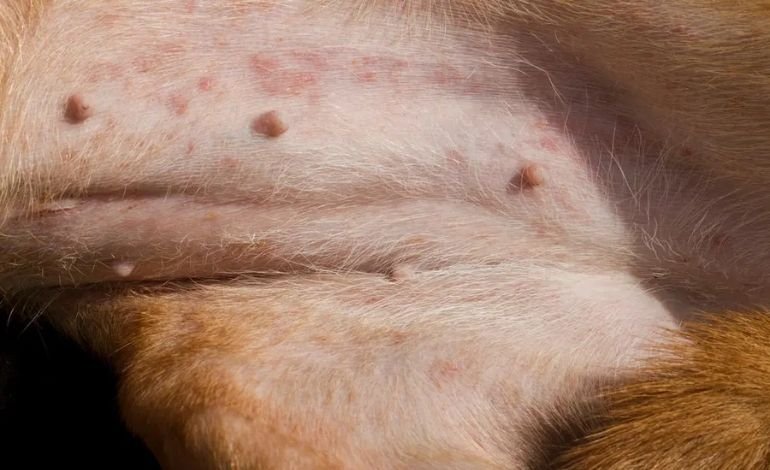
Flea bites can cause intense itching, especially in dogs with flea allergy dermatitis, an allergic reaction to flea saliva. Itching and skin lesions may develop around the tailhead and lower back.
You may not see fleas, so visible fleas aren’t required before flea-related itching is considered. Hot Springs Animal Hospital provides pet parasite prevention solutions and treatment for fleas and ticks.
2. Environmental allergies
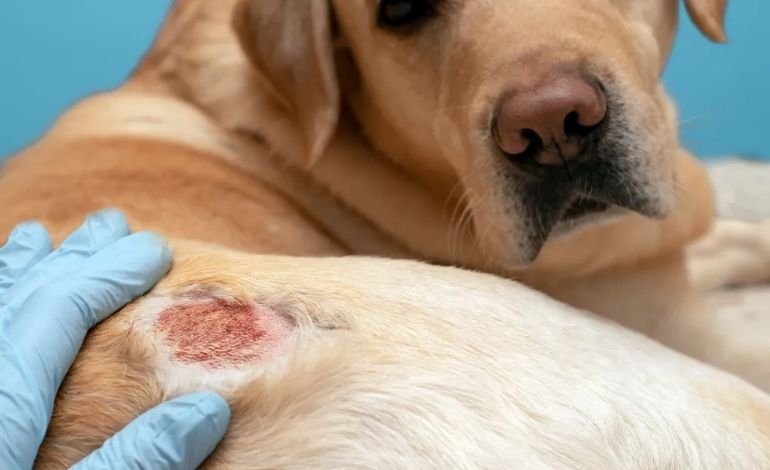
Dogs can react to environmental allergens such as pollens, molds, and dust mites. Atopic dermatitis, one of the common dog skin allergies, often causes ongoing itchiness and may also be linked with ear or skin infections. Some dogs have seasonal flares, while others itch year-round. The pattern can give your veterinarian an important clue.
3. Food allergies
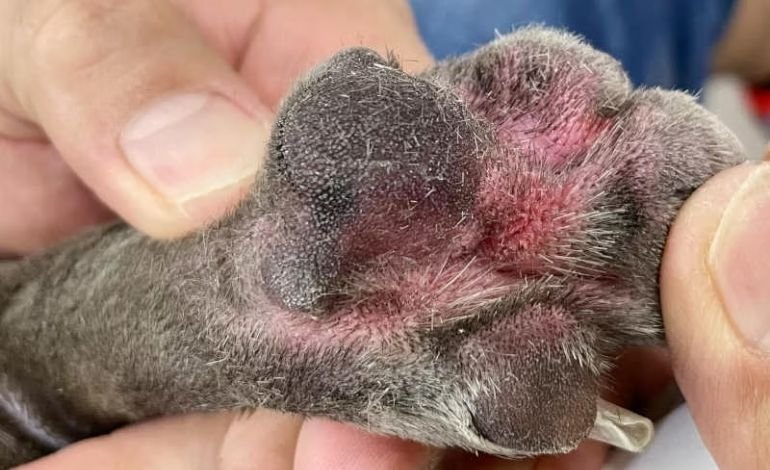
Food allergies can cause itchy skin and may affect areas such as the paws, face, ears, or other parts of the body. Digestive signs can occur too. However, skin or stomach symptoms alone cannot confirm a food allergy. Your veterinarian may need a structured diet trial to determine whether food is contributing to the problem when your dog is scratching all the time.
4. Bacterial or yeast skin infections

Bacterial and yeast infections can cause itching, redness, scaling, odor, discharge, scabs, or hair loss. They may also develop after another skin problem has already caused inflammation and scratching. Damaged skin and infection can make discomfort worse. Finding and treating the dog’s skin infection is an important part of the evaluation.
5. Mites and other external parasites
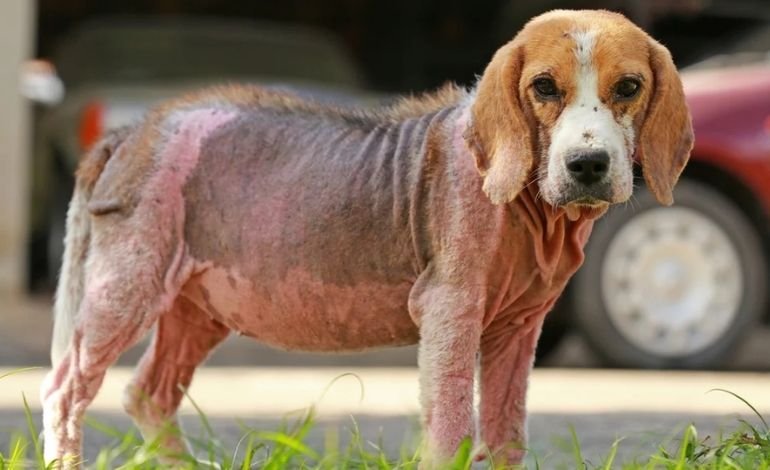
Mites, including those that cause sarcoptic mange, can produce significant itching. Skin changes may include hair loss, crusting, and irritation. Because different parasites can look similar to other skin disorders, a veterinarian may use skin scrapings or other tests to identify them.
Parasite prevention history is useful when finding the cause. Regular pet wellness exams can also provide an opportunity to review your dog’s prevention needs.
6. Contact irritation or dermatitis

Sometimes itching begins after your dog’s skin contacts a substance that causes irritation or an allergic response. Possible triggers include certain plants, fabrics, soaps, or other products.
Contact dermatitis often affects areas that directly touch the trigger. Tell your veterinarian about recent changes to shampoos, cleaning products, bedding, outdoor exposure, or other things your dog contacts.
7. Dry skin or other skin problems
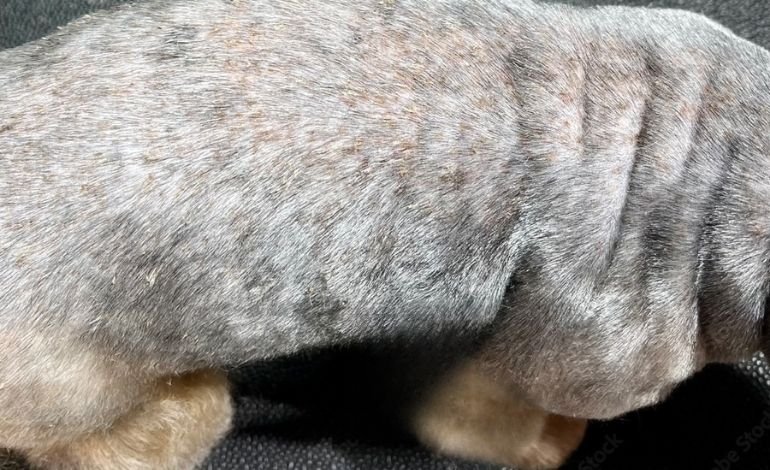
Dryness, ongoing inflammation, and other dermatologic problems can change the skin and contribute to discomfort. Chronic skin disease may lead to scaling, thickening, color changes, or discharge.
Because several conditions can produce similar signs, persistent itching shouldn’t automatically be labeled as dog skin allergies or dry skin without an examination. A proper evaluation can be part of your pet medical services when the problem continues.
What Does Dog Itching From Allergies Look Like?
Allergy-related itching often follows a pattern that can give you useful clues. Instead of focusing on how often your dog scratches, notice where the irritation appears and what your dog does in response.
▸ Paws: Frequent licking or chewing
▸ Face: Rubbing against furniture, carpets, or the floor
▸ Ears: Repeated scratching or head shaking
▸ Skin: Redness, irritation, or hair loss
▸ Seasonal pattern: Symptoms that flare during certain times of year
Dogs with environmental allergies can also develop recurring skin or ear infections. Food allergies may occur with digestive upset, although these signs alone can’t confirm an allergy. Pet wellness exams can give you a regular opportunity to discuss changes that continue between visits.
When to Take an Itchy Dog to the Vet?
Frequent or worsening itching requires closer attention when your dog develops visible skin changes, or the problem starts affecting normal rest and activity. The following signs are useful reasons to arrange a veterinary evaluation for your dog. They can also help you understand whether your usual vet visit frequency is enough for your dog’s current needs:
- Constant or worsening scratching
- Repeated licking, chewing, or rubbing
- Hair loss or bald patches
- Red, raw, crusted, or damaged skin
- Sores, discharge, or an unusual odor
- Recurring ear problems
- Itching that interferes with rest or normal activity
- Symptoms that improve and then repeatedly return
What Will a Veterinarian Check When Your Dog Won’t Stop Itching?
Finding the cause starts with looking beyond the scratch itself. Your veterinarian will consider the history, itch pattern, skin changes, parasite prevention, previous treatments, and other clues that help narrow the possibilities and guide testing.
- A detailed medical and skin history
- A physical and dermatologic examination
- Flea combing and evaluation for external parasites
- Skin cytology or other testing when indicated
- Skin scrapings when parasites are suspected
- Ear evaluation and cytology when ear disease is present
- Further investigation for allergies when other dog itching causes have been addressed
What Can You Do Before Your Dog’s Vet Visit?
A little preparation can give your veterinarian a clearer picture of what has been happening at home. Before the appointment, take a few minutes to gather these details:
- Track the timeline: Note when the itching started and whether it has become more or less frequent.
- Record patterns: Write down whether symptoms seem worse during certain seasons or after outdoor activities.
- Note recent changes: Include new foods, treats, shampoos, bedding, medications, or household products.
- Take photos: Capture visible skin changes, especially if they come and go.
- Bring prevention details: Know which flea and tick products your dog receives and when the most recent dose was given, particularly when considering flea allergy in dogs.
- List previous treatments: Tell your veterinarian what you have already tried and how your dog responded.
A detailed history can help your veterinarian narrow down possible causes and decide which next steps are appropriate.
Help Your Itchy Dog Get the Right Care at Hot Springs Animal Hospital!
Persistent itching has many possible causes, so the most useful next step is identifying what’s driving your dog’s discomfort. If your dog keeps scratching, licking, chewing, or developing skin changes, a veterinary evaluation can help guide appropriate care.
Hot Springs Animal Hospital in Murrieta provides veterinary medical care for allergies and skin conditions, along with parasite prevention and wellness care. Our team can assess your pet’s skin and help determine whether further testing or dog itchy skin treatment is appropriate.
Early evaluation can also help prevent ongoing irritation from becoming a larger skin problem for your dog and more comfortable at home. Write to us here, schedule an appointment, or call (951) 600-0830 to discuss recurring itching and possible skin problems affecting your dog.
Frequently Asked Questions
Share This Article

Written by : Hot Springs Animal Hospital
Hot Springs Animal Hospital is dedicated to providing exceptional veterinary care in Murrieta, CA. Our experienced team is passionate about keeping pets healthy through preventive care, advanced treatments, and compassionate service. We proudly serve pet parents with a full range of veterinary services to ensure every pet lives a long, happy life.